

Bringing peptides to room temperature before injecting
A small pause on the counter can make the whole shot easier.
TL;DR
- Cold liquid injected into cold tissue can sting more.
- Letting the dose reach room temperature often eases it.
- Keep storage cold; warm only what you will use now.
Why room temperature helps
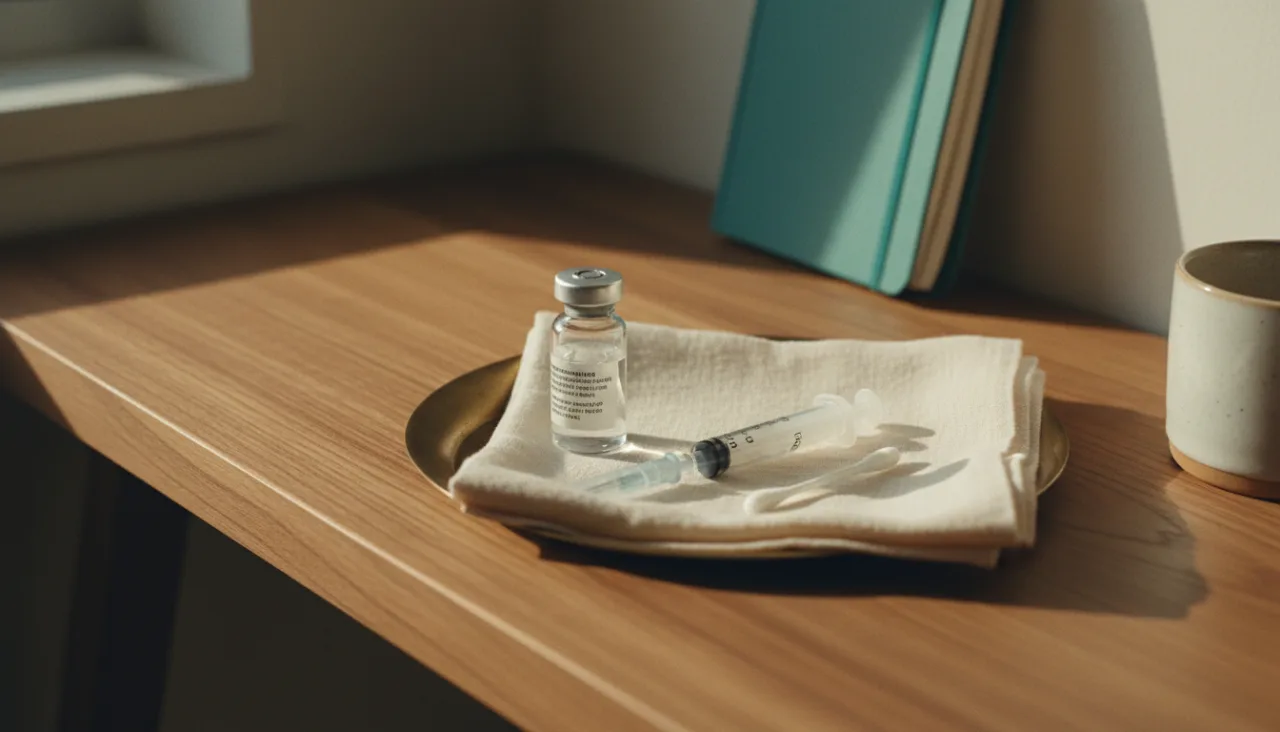
Warming a dose to room temperature before injecting can make the shot more comfortable. A cold liquid pushed under the skin feels sharper. Picture drinking ice water fast versus letting it sit a minute. The cold itself is a sensation your nerves notice. Let the liquid match your body a little more, and there is less to flinch at.
How it works
Cold has two effects at the injection site. First, the fluid itself registers as a cold, sharp feeling as it enters. Second, cold tissue and thicker cold liquid can make the push feel rougher. As the dose warms toward room temperature, the liquid thins slightly and the temperature shock fades. Warming does not change the medicine. It only changes how the injection feels going in.
Who asks about it
People ask after a few stinging shots from a vial kept in the fridge. The fix is often as simple as timing, not technique.
What the research says
Injection comfort is a real, studied variable. World Health Organization injection guidance, updated in 2010, stresses technique and preparation for safe, comfortable injections, per the WHO best-practices reference. A 2022 clinical study registered on the federal trials database examined how site temperature and solution buffering affect injection pain, per ClinicalTrials.gov. The practical habit that follows: draw the dose, let it sit briefly, then inject.
What to know before considering it
Never speed-warm a peptide with hot water, a heater, or a microwave. Heat can damage the molecule. Keep the vial cold in storage and let only the drawn dose reach room temperature. Follow your pharmacy's specific storage instructions, and ask your clinician if anything is unclear.
The Halftime POV
This is the kind of small detail that makes self-injection sustainable. Comfort is not vanity; it is adherence. A shot that does not sting is a shot you will actually keep taking.
Related reading:
FAQ
Q: Should you let peptides reach room temperature? A: Many people find that warming a refrigerated dose to room temperature before injecting reduces the sting. Keep storage cold and warm only the dose you will use.
Q: Does a cold peptide injection hurt more? A: A cold liquid can feel sharper going in, and cold tissue may react more. Warming the dose often makes the injection more comfortable.
Q: How long to warm a peptide before injecting? A: About 15 to 30 minutes on the counter is usually enough. Do not use hot water, a microwave, or direct heat.
Disclaimer
This article is educational and is not medical advice. Compounded medications are not FDA-approved. Clinical outcomes depend on individual factors and require physician evaluation. Results vary.
Get started
We share what we learn along the way — the research, the regulations, the real-world trade-offs. Get started with Halftime Health.
Sources
Frequently asked questions
Should you let peptides reach room temperature?
Many people find that letting a refrigerated peptide warm to room temperature before injecting reduces the sting. Keep storage cold and warm only the dose you plan to use.
Does a cold peptide injection hurt more?
A cold liquid can feel sharper going in, and cold tissue may react more. Warming the dose to room temperature often makes the injection more comfortable.
How long to warm a peptide before injecting?
Setting the drawn dose on the counter for about 15 to 30 minutes is usually enough. Do not use hot water, a microwave, or direct heat.
Keep reading
A licensed physician can build a protocol from your own labs.
Membership from $39/mo, or $390 for the year, including your onboarding panel. Each protocol is its own monthly subscription.