
Continuous glucose monitors (CGM): common questions answered
The wearable that turns blood sugar from one snapshot into a full-day movie.
TL;DR
- A CGM is a skin sensor that reads glucose every few minutes.
- It shows a full-day trend instead of a single fingerstick snapshot.
- You do not need diabetes to wear one, but context still matters.
What a continuous glucose monitor is
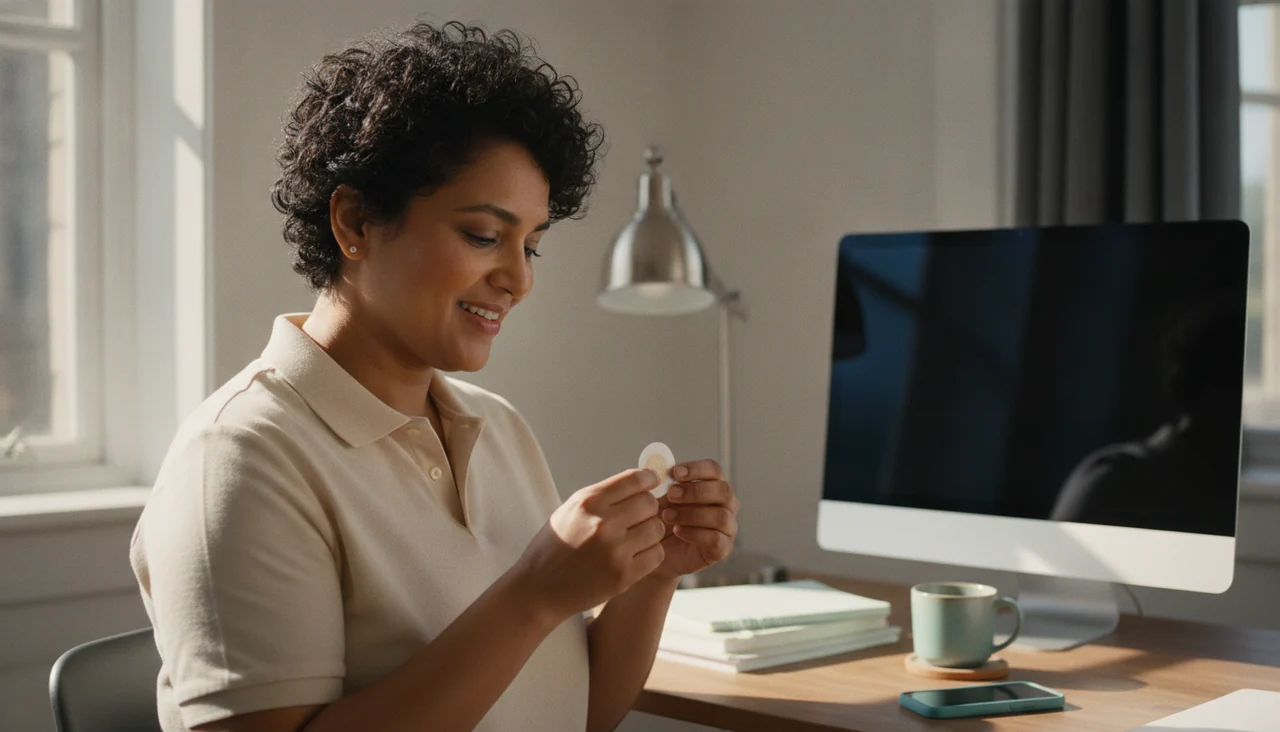
A continuous glucose monitor is a small skin sensor that reads your blood sugar every few minutes, all day. The short name is CGM (in plain English: a wearable glucose sensor). A tiny soft filament sits just under the skin. It samples the fluid around your cells and turns that into a glucose number on your phone. Instead of a single fingerstick, you get a continuous line, which is why it reads more like a movie than a photo.
How it works
Think of a fingerstick as one still photo and a CGM as time-lapse video. The sensor measures glucose in interstitial fluid, the watery layer between cells, not directly in blood. Because that fluid lags blood by a few minutes, CGM readings trail true blood sugar slightly. The device smooths thousands of readings into a trend line. That trend is the real value, showing how a meal, a walk, or a stressful morning moves your glucose over hours.
Who asks about it
People ask after hearing that healthy adults now wear CGMs to understand their metabolism. The question underneath is whether the data is useful without diabetes. It can be, mainly as a way to see cause and effect in your own body.
What the research says
Continuous glucose monitors are well established for diabetes management and improve a measure called time in range, per the US National Institute of Diabetes and Digestive and Kidney Diseases (2024). Reviews on the US National Library of Medicine's NCBI Bookshelf describe the interstitial-fluid method and its short lag behind blood glucose (NCBI Bookshelf, 2023). Evidence in people without diabetes is younger and still developing.
What to know before considering it
A CGM shows patterns, not a diagnosis. Readings can drift on the first day of wear or during rapid changes. Numbers need context from sleep, food, and activity. If you are exploring metabolic health, review the data with a licensed clinician rather than reacting to every spike.
The Halftime POV
We like CGMs because they make an invisible system visible. Watching your own glucose respond to breakfast is a fast, personal lesson no chart can match. Used thoughtfully, that feedback supports steadier habits.
Related reading:
FAQ
Q: what is a continuous glucose monitor A: A continuous glucose monitor is a small sensor worn on the skin that reads glucose in the fluid under the surface. It reports a new value every few minutes to a phone or reader.
Q: how does a continuous glucose monitor work A: A tiny filament sits just under the skin and measures glucose in the surrounding fluid. The sensor converts that reading into a number and sends it wirelessly, building a full-day curve instead of one snapshot.
Q: do you need diabetes to use a CGM A: You do not need diabetes to wear a CGM, and healthy people increasingly use them to see how meals and exercise move their glucose. A clinician can help interpret the patterns.
Disclaimer
This article is educational and is not medical advice. Compounded medications are not FDA-approved. Clinical outcomes depend on individual factors and require physician evaluation. Results vary.
Get started
We share what we learn along the way — the research, the regulations, the real-world trade-offs. Get started with Halftime Health.
Sources
Frequently asked questions
what is a continuous glucose monitor
A continuous glucose monitor is a small sensor worn on the skin that reads glucose in the fluid under the surface. It reports a new value every few minutes to a phone or reader.
how does a continuous glucose monitor work
A tiny filament sits just under the skin and measures glucose in the surrounding fluid. The sensor converts that reading into a number and sends it wirelessly, building a full-day curve instead of one snapshot.
do you need diabetes to use a CGM
You do not need diabetes to wear a CGM, and healthy people increasingly use them to see how meals and exercise move their glucose. A clinician can help interpret the patterns.
Keep reading


Membership includes a blood panel you collect at home. A licensed physician reviews your labs.
Membership from $39/mo, or $390 for the year, including your onboarding panel. Each protocol is its own monthly subscription.